
Territorial Commons: Uranium
Seminar (Spring 2024)
Territorial Commons:
Mapping Narratives in the Shifting Extractive Landscapes of the Antipodes
Teammate
August Sklar︎︎︎
Professor
Rosalea Monacella, PhD
Design Critic in Landscape Architecture,
Harvard University Graduate School of Design
Exhibitions
To be included in an exhibition on extractive landscapes at:
National Museum in Australia & Harvard Natural History Museum
Territorial Commons:
Mapping Narratives in the Shifting Extractive Landscapes of the Antipodes
Teammate
August Sklar︎︎︎
Professor
Rosalea Monacella, PhD
Design Critic in Landscape Architecture,
Harvard University Graduate School of Design
Exhibitions
To be included in an exhibition on extractive landscapes at:
National Museum in Australia & Harvard Natural History Museum
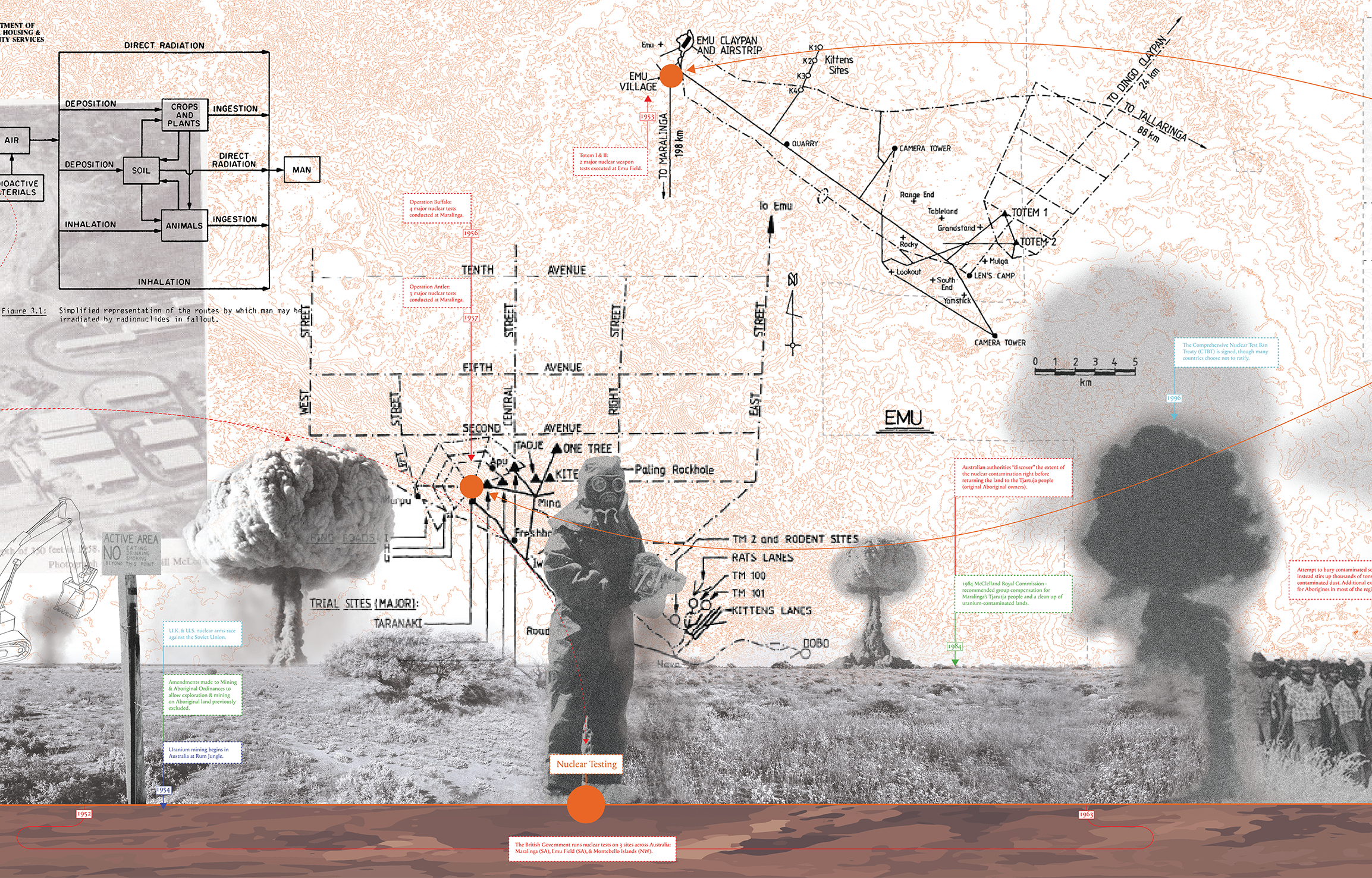
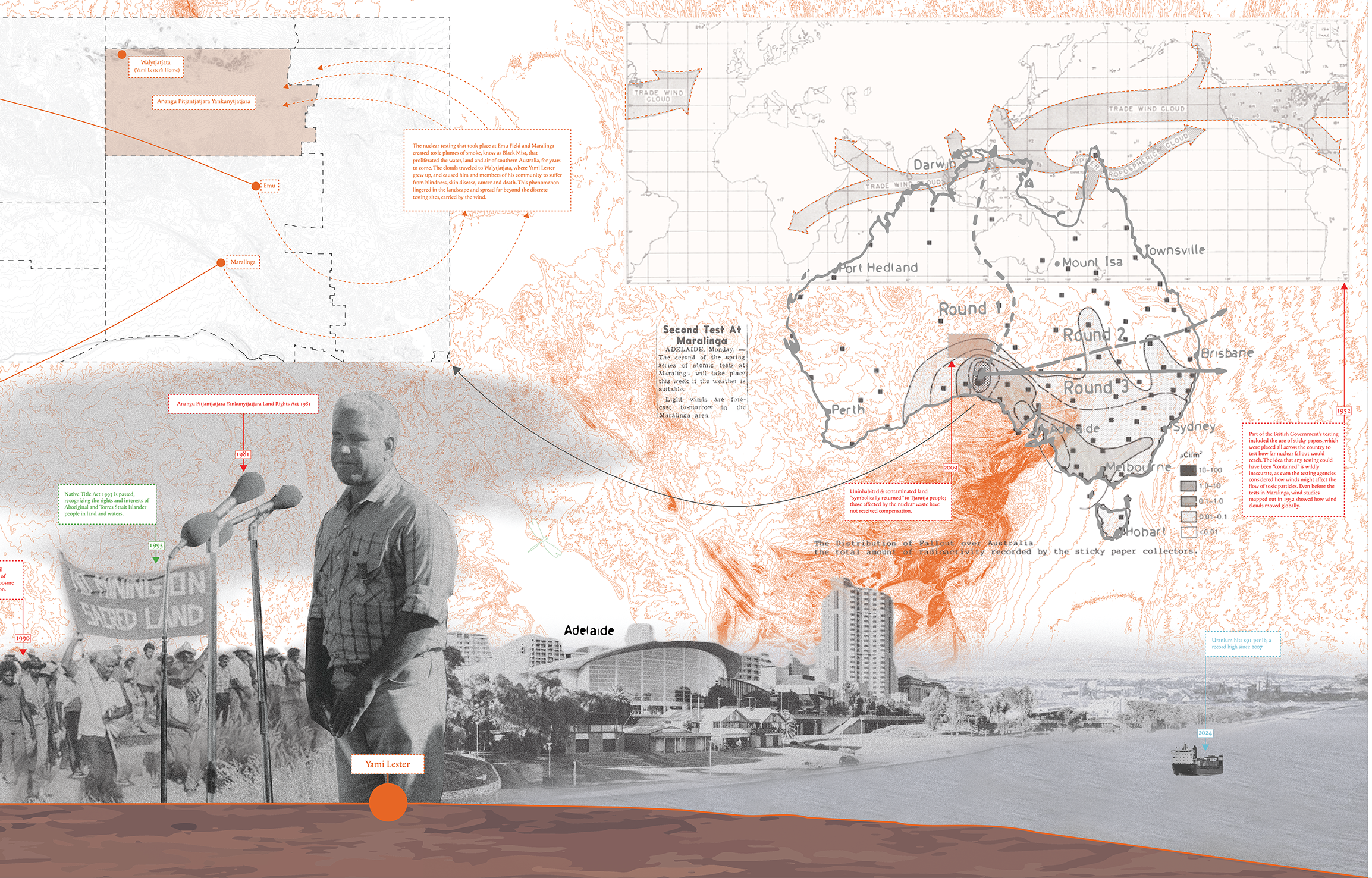
Project OverviewThe legacy of uranium extraction is a history of colonization and contamination. Once uranium ore’s potential to create nuclear energy was discovered, the largest powers of the world plundered for more power. Through uranium mining, we begin to unveil one facet of how the settler colony of Australia was able to establish itself on “unknown land” (terra nullius). Uranium was extracted with no regard for life and no regard for the preservation of this resource and its surroundings. In addition to extraction, the legacy of uranium also lived within the atomic bomb testings that were detonated across Australia. The nuclear bombs of Emu Field and Maralinga were known to pollute their surroundings with “Black Mist”, which was radioactive poison carried by the wind, which spread skin disease, blindness and death to the adjacent communities. Mapping the history of uranium in Australia illuminates the reality of a government that has inflicted coercion and cruelty onto a people, for the acquisition of more power.
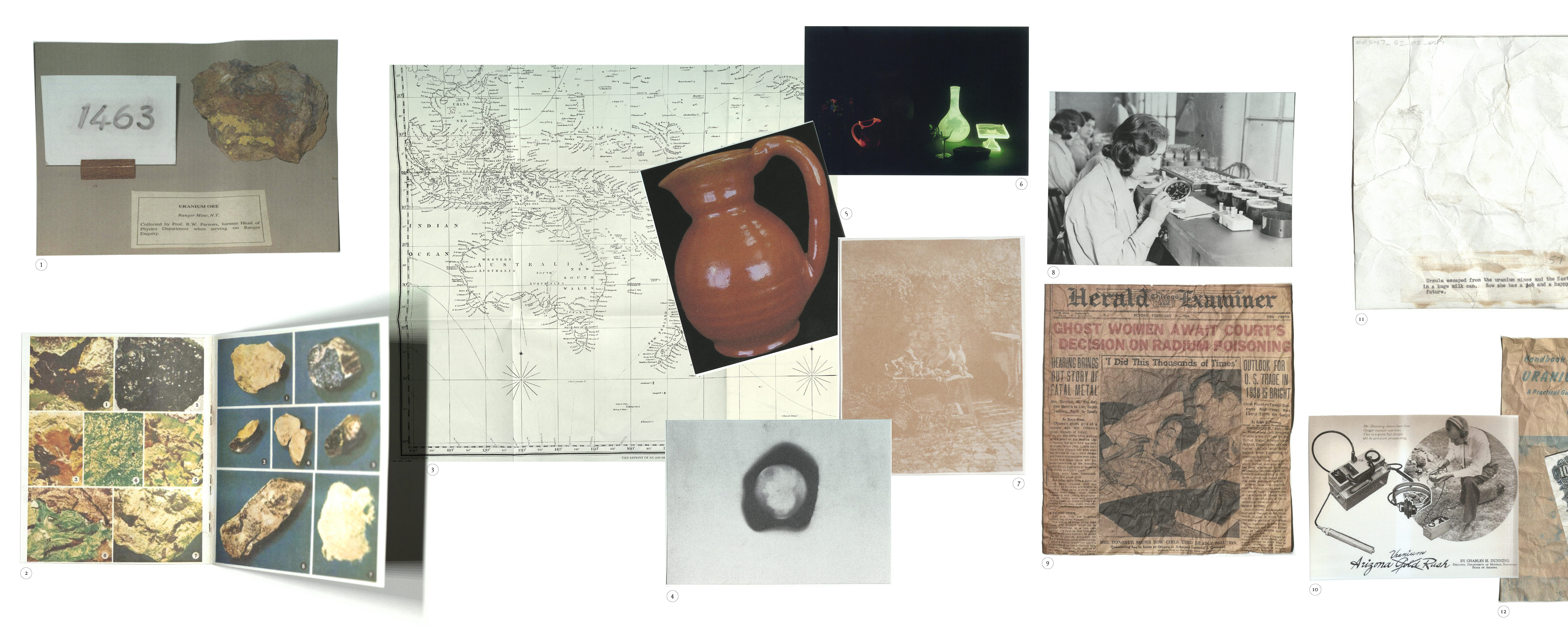
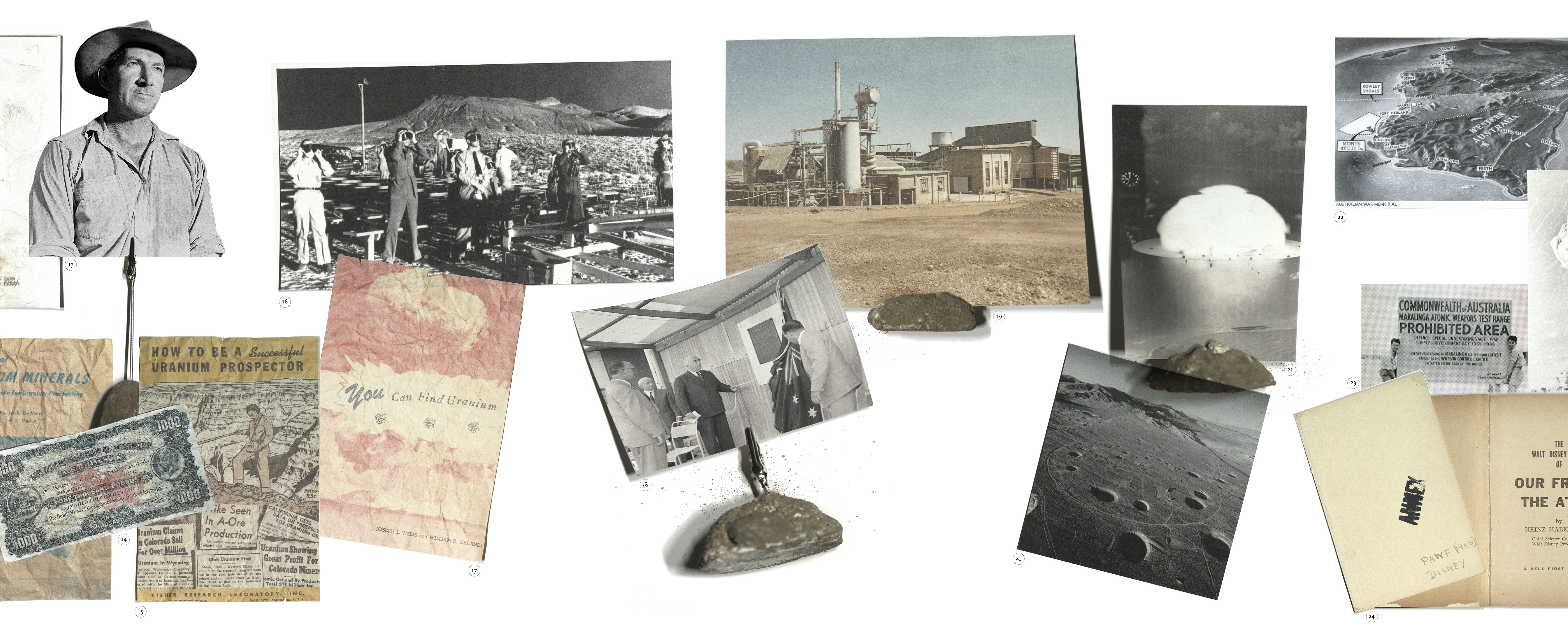
ARCHIVE TABLE



COMPOSITE DRAWING


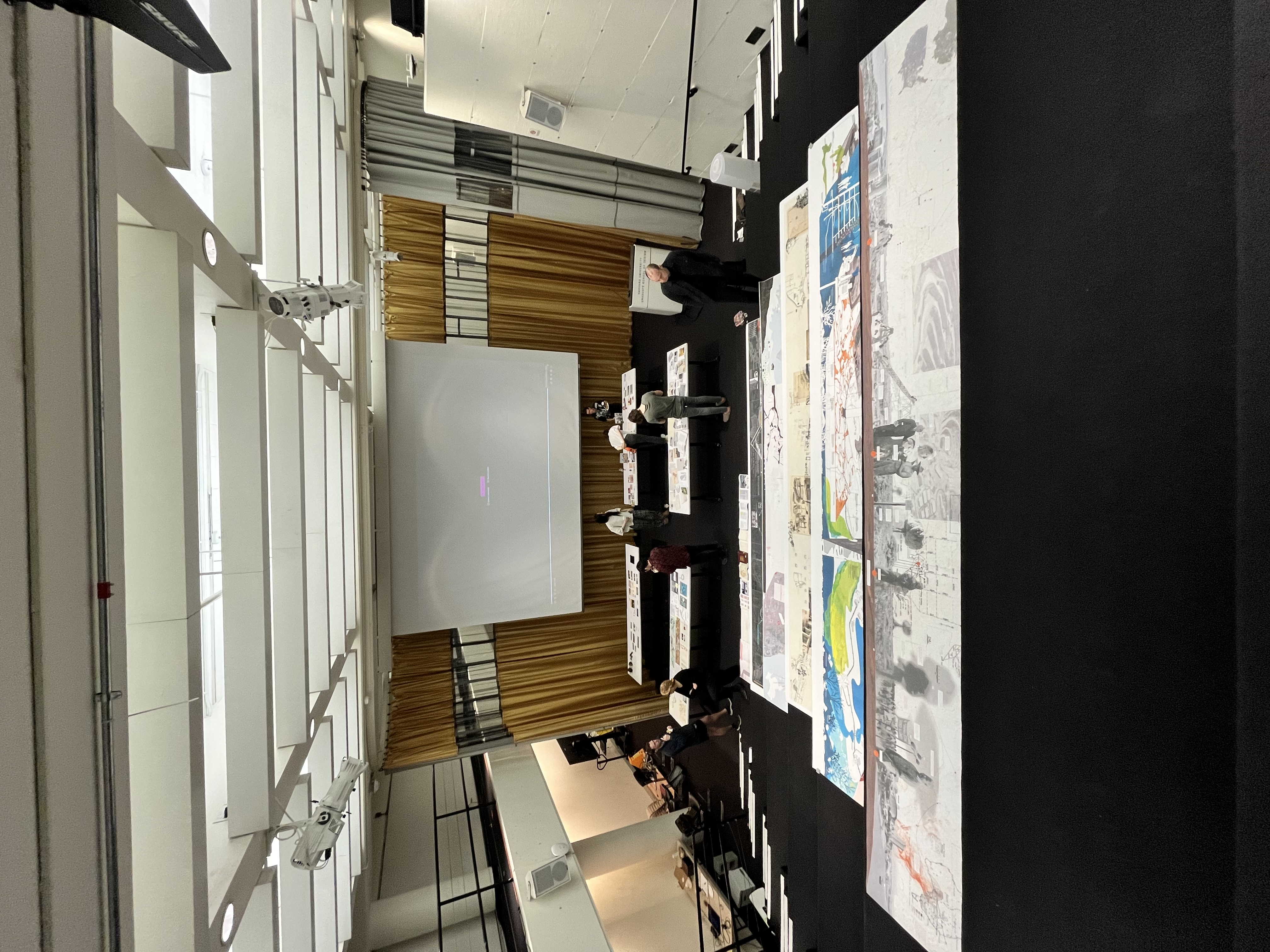
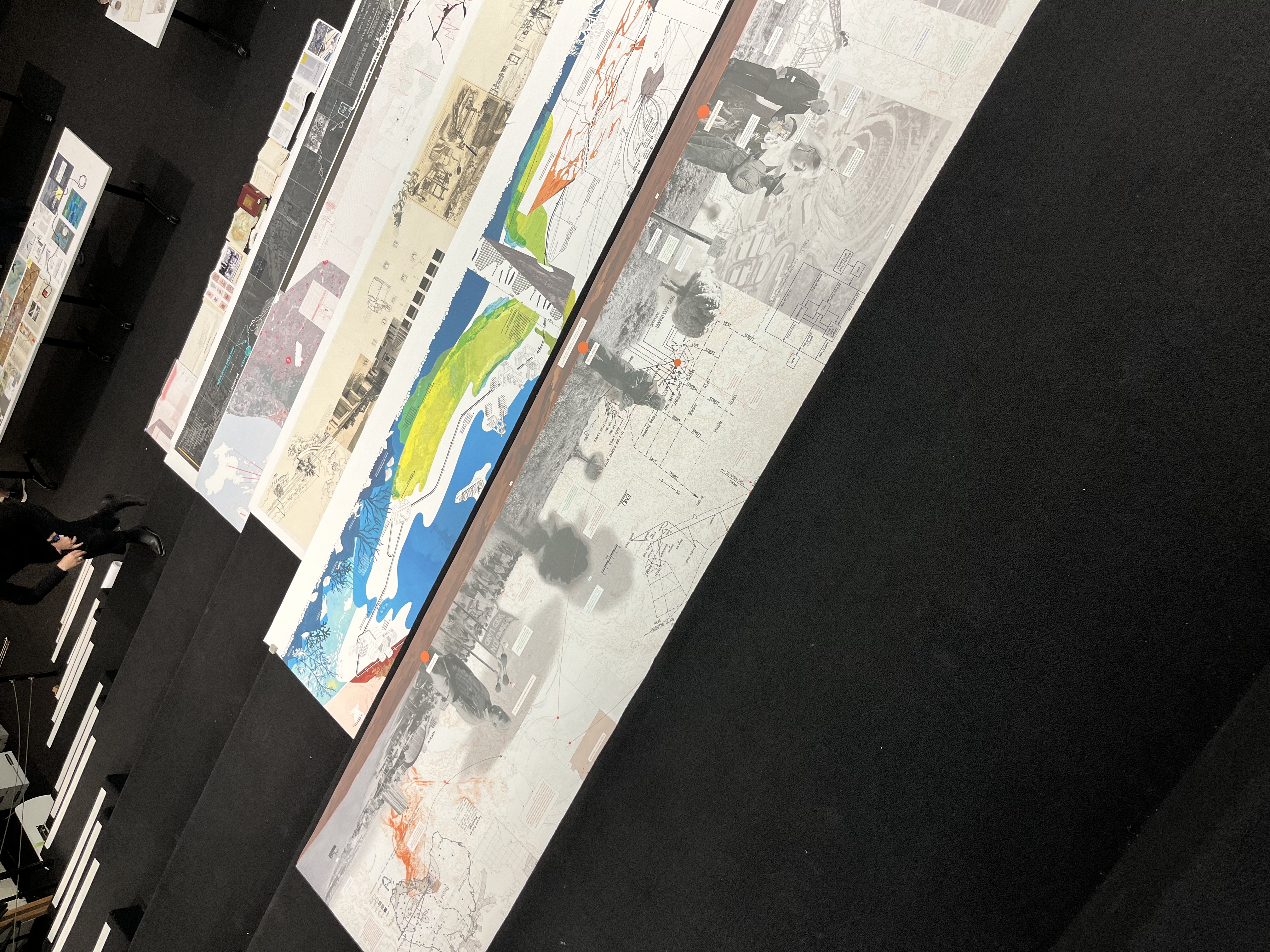
VIDEOS
Two short videos were also made to accompany these drawings. They are available upon request.© 2024 Emily Kim